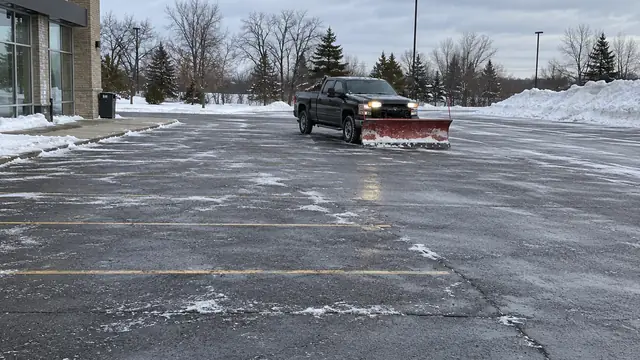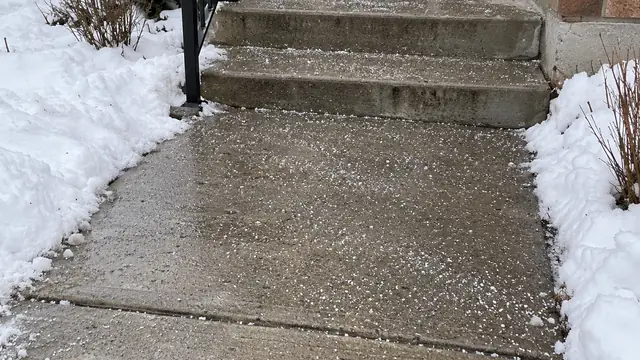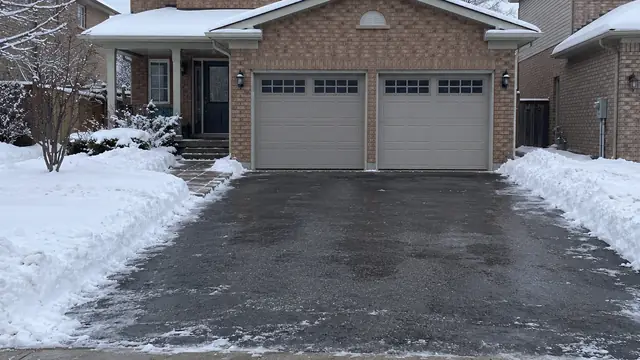

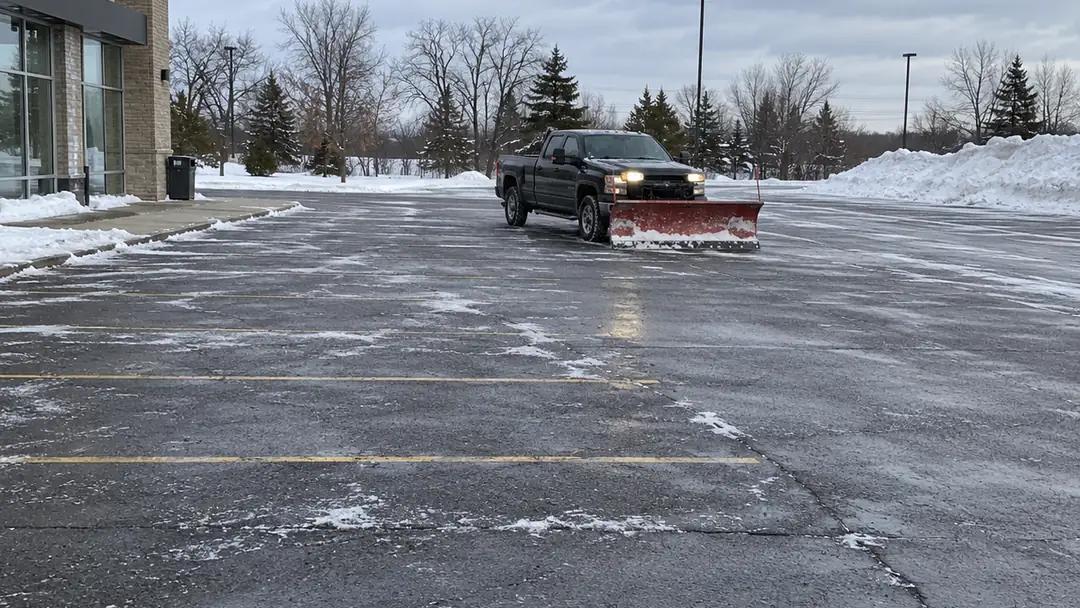
A practical commercial snow removal checklist for plazas, condos, townhouse complexes and small lots in Halton and Peel, from site maps and priority zones to logs, insurance and Ontario's 60-day notice rule.
What should a commercial snow removal checklist cover?
A commercial snow removal checklist should cover nine things: a site map, snow storage areas, priority zones, trigger and timing, salting, documentation, insurance certificates, storm communication and end-of-season cleanup. Settle each in writing before November, because the first storm is a bad time to learn the contract says nothing about the fire route.
We wrote this for the people who get the 6 a.m. phone call: property managers, condo boards, plaza owners and the volunteers who look after places of worship across Halton and Peel. Use it to brief a new contractor, audit the one you have, or build the scope section of a tender. Most winter headaches on commercial sites start with something nobody wrote down.
| Item | What to settle before November | Why it matters |
|---|---|---|
| Site map | Marked-up aerial photo or site plan | Everyone plows the same lot |
| Snow storage | Where piles go, and where they never go | Protects sightlines, drains and parking |
| Priority zones | Entrances, fire routes, accessible parking, sidewalks | What people use gets cleared first |
| Trigger and timing | Depth in cm and an open-for-business deadline | No guesswork at 3 a.m. |
| Salting | Surfaces, product and timing | Refreeze is the hazard plowing misses |
| Documentation | Visit logs, photos, weather notes | Your record if a claim arrives |
| Insurance | Current certificate from the contractor | Confirms coverage before the first storm |
| Communication | Named contacts for storm days | Problems get fixed in hours, not days |
| Spring cleanup | Sweeping, sod repair, damage walk-around | Closes the season cleanly |
What is Ontario's 60-day notice rule for snow and ice injuries?
Since January 29, 2021, section 6.1 of Ontario's Occupiers' Liability Act says a lawsuit for personal injury caused by snow or ice generally cannot go ahead unless written notice, giving the date, time and location, was served within 60 days of the injury. This is a plain-language summary, not legal advice.
The notice has to be served personally or by registered mail on at least one of two parties: the occupier of the premises, or an independent contractor the occupier hired to remove snow or ice at the time. There are two exceptions. Notice is not required if the injured person died as a result of the injury, and a claim can still proceed if there was a reasonable excuse for missing or insufficient notice and the defendant was not prejudiced.
LawPRO's practicePRO points out that the 60-day notice sits alongside the general two-year limitation period; it does not replace it. It also notes the Act does not apply where a municipality is the occupier of a public highway or road, which is why city sidewalks follow different rules. Ask your lawyer and insurer how this applies to your property.
What the rule means for a property manager
- Agree in writing who receives notices for the site, and how the contractor forwards one if it lands with them first.
- Keep visit logs, photos and weather notes in one place you can search by date, time and location.
- Ask your lawyer or insurer how long to keep winter records; the two-year limitation period still applies.
- Report incidents to your insurer promptly, even if no notice has arrived yet.
How should you map a commercial site for snow removal?
Start with an aerial photo or site plan and mark every surface to be cleared, every place snow may be piled, and every hazard a plow operator cannot see under snow: curbs, islands, speed bumps, drains, bollards and fire hydrants. Give the same map to the contractor, your staff and anyone covering a shift.
Mark snow storage first, because the wrong pile causes most of the follow-on problems: blocked sightlines at the exit, parking spaces lost in December and still lost in March, and meltwater running across a walkway to refreeze overnight. Keep piles off drains, away from entrances and downhill of foot traffic where you can.
Fire routes deserve their own colour on the map. In Mississauga, once a fire route is designated on a property, Fire Route By-law 0216-2023 requires the owner to maintain it and remove any snow, ice or obstruction that would prevent use of the fire route, its signs or hydrants. Halton municipalities have their own fire route rules, so confirm yours with the local fire department.
Priority zones to mark first
- Main entrances, exits and emergency doors
- Fire routes and the space around hydrants
- Accessible parking spaces and the curb cuts that serve them
- Sidewalks, walkways and ramps along the building
- Loading areas, garbage enclosures and delivery doors
What trigger depth and timing should a commercial snow contract set?
A commercial snow contract should set a trigger depth in centimetres, a clear-by time tied to your opening hours, and what happens during long storms, such as how often crews return. A plaza, a condo and a place of worship need different deadlines, so write them around when people actually arrive.
A plaza with an early coffee shop needs the lot and walks open before staff arrive. A place of worship needs its busiest days covered first. A condo needs ramps and the garage entrance done before the morning rush. Agree on the low end too: a light snow followed by a hard freeze can be slicker than a deep fluffy one, so the contract should say what happens below the plow trigger. Weighing a contract against calling in help? Read seasonal contracts vs per-visit plowing.
How should salting be handled on a commercial lot?
Write salting as its own line: which surfaces get salt, which product, when it goes down and what happens below the plow trigger. Plow and shovel first, then salt, because salt spread on top of unplowed snow is wasted. Go lighter on interlock and near planting beds, and switch to sand in deep cold.
Peel Region's guidance is a good baseline for any site: clear snow first, salt only where it is needed for safety, and remember that rock salt only melts ice above about -10°C. Below that, sand or grit gives traction instead. Peel also suggests looking for contractors that are Smart About Salt. Our guide to rock salt damage on lawns and interlock compares products for colder days and paver-safe choices.
What records should your snow contractor keep?
Ask for a visit log for every service: date, arrival and departure time, what was plowed, shovelled and salted, the product used and conditions on site. Add time-stamped photos of entrances and walkways. Those records are what you and your insurer reach for when a 60-day notice arrives naming a date and time.
Keep your own side too: incident reports, tenant complaints and notes whenever you call for extra service. Store everything by date. We provide visit reports on request with our commercial snow removal service, and the scope is written down before the season starts.
What insurance should a snow contractor carry?
Ask for a current certificate of insurance before the first storm, check that the policy dates cover the whole season, and confirm the certificate lists your company or condo corporation the way your insurer requires. Have your insurer or lawyer read the contract's indemnity clause, because it decides who carries which risk.
Check this every year, not only when you change contractors, since policies renew. A contractor who cannot produce a certificate quickly has given you an answer.
How should storm communication and spring cleanup work?
Name one contact on each side with a phone that is answered during storms, and agree how problems get reported: a text with a photo beats an email at 5 a.m. In spring, book a sweep of salt and sand, a walk-around for curb, sod and interlock damage, and a short debrief on what to change.
Spring is also when lawn strips along the lot show salt burn. If the same edge browns every April, move the snow pile and plan commercial lawn care that starts with flushing, raking and overseeding. Our commercial lawn maintenance guide covers the season that follows, and our page on who clears the sidewalk in Milton, Mississauga and Oakville explains where the municipality's job ends and yours begins.
Frequently Asked Questions
Who is responsible for snow removal on a commercial property in Ontario?
Responsibility usually sits with the occupier, the party in control of the property, such as the owner, landlord, condo corporation or a tenant under its lease. Many occupiers hire a contractor, and Ontario's 60-day notice rule names both the occupier and that contractor as parties who can receive notice. This is not legal advice.
What is the 60-day notice rule for slip and fall claims in Ontario?
For injuries caused by snow or ice on private property, Ontario's Occupiers' Liability Act generally requires written notice within 60 days, stating the date, time and location, served personally or by registered mail on the occupier or its snow contractor. There are exceptions for death and for a reasonable excuse without prejudice. This is not legal advice.
Should a commercial snow contract include salt?
Yes, written as its own line: which surfaces, which product, when it is applied and what happens on freeze-thaw nights below the plow trigger. Our commercial scopes list salting alongside plowing and walkway shovelling, so everyone knows what the site gets on each visit.
What types of commercial sites does Lawn By Moe plow?
We handle plazas, small commercial lots, townhouse complexes, condo and property-manager sites, and places of worship. We are based in Milton and work across Halton, Peel and west Toronto. Each site is priced on its own after a free site visit, with a written scope covering lots, walkways, salt and visit reports on request.
When should property managers sign a commercial snow contract?
Before November, so the site map, priority zones, insurance certificate and contact list are settled before the first storm. A contractor needs time to walk the site and plan the route around your opening hours. If you are tendering several properties, start in September or early October.
Sources
Want Us to Handle It?
Lawn By Moe is based in Milton and serves Mississauga, Oakville, Burlington, Halton Hills, Brampton and the GTA. Free quotes, usually the same day.