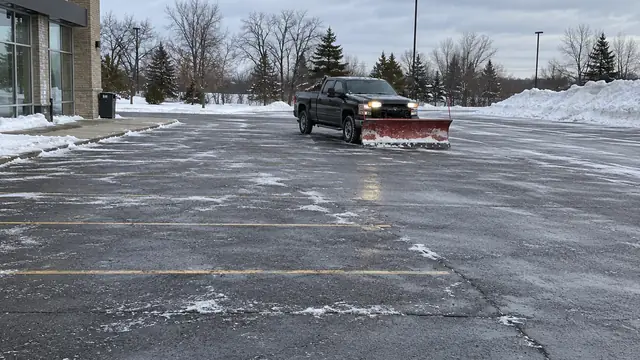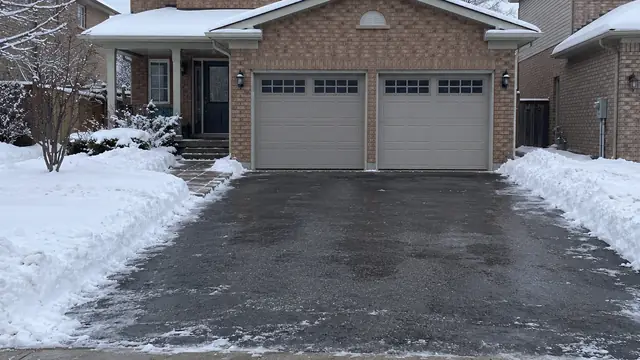
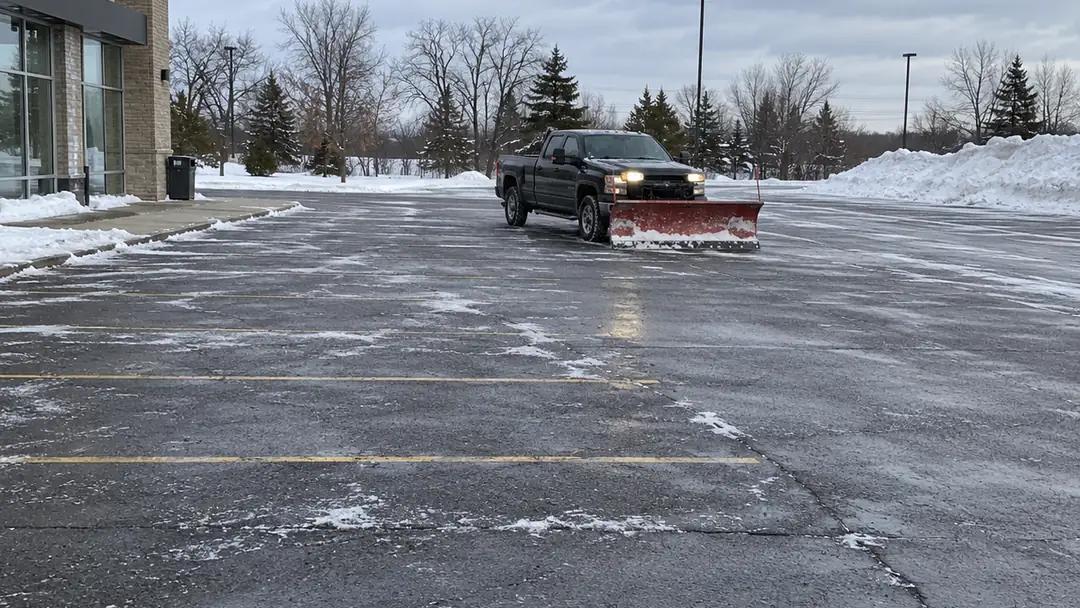
What does commercial snow removal in Milton include?
Commercial snow removal in Milton with us covers plowing parking lots and drive aisles, shovelling walkways, entrances, steps and ramps, and salting the surfaces people walk and drive on. It runs on a seasonal contract from November 1 to April 30, with a written scope and visit reports on request.
A plow truck clears the lot while the shovel crew works the parts a truck cannot reach: storefront sidewalks, entrance landings, accessible parking spaces, mail kiosks and the ramp by the side door. Salt goes down after the clearing, because a cleared walkway that refreezes overnight is still where people slip. We work 24/7 during snow events, in the priority order your scope sets.
- Plowing: parking lots, drive aisles and private roads
- Shovelling: walkways, entrances, steps, ramps and mail kiosks
- Salting: the walkways, entrances and lot areas named in the scope
- Stacking: only in areas agreed before the season
5 cm trigger or zero tolerance: which does your site need?
A 5 cm trigger means plowing starts once 5 cm (2 in) of snow builds up, which suits most small lots and townhouse roads. Zero tolerance means any snow or ice gets treated, which suits busy plazas and main entrances. Our standard commercial contract uses the 5 cm trigger; if a site needs more, we say up front whether we can cover it.
The weather explains why the trigger matters. Environment Canada climate normals for Toronto Pearson (1991 to 2020) show about 114.5 cm of snow a year, but only about 7 days a year bring 5 cm or more in a single day. Most snow days are light ones, and light snow packed down by cars and boots is what turns into ice.
So a plow trigger on its own leaves a lot of the winter untreated, especially the refreeze after a mild afternoon. We write the plow trigger and the salting rule into the scope as two separate lines, and price the site on both.
| Question | 5 cm trigger | Zero tolerance |
|---|---|---|
| When plowing starts | Once 5 cm (2 in) has built up | As soon as snow covers the surface |
| Salting | Its own rule in the scope | Any snow or ice on listed areas |
| Visits per storm | Fewer, timed to the build-up | More, including light snow and refreezes |
| Best for | Small lots, townhouse roads, offices with set hours | Busy plazas, medical offices, main entrances |
Where does the snow go on a commercial lot?
Before November 1 we walk the site and agree on a site map: where snow is stacked, which areas are cleared first and what must never be buried. Good stacking keeps piles off drains, hydrants, sight lines and accessible spaces, and away from landscaped islands that salt will burn.
In Milton this is also a by-law matter. Town of Milton By-law 106-2019 requires the owner of every parcel of land to clear the adjacent sidewalk within 24 hours after a snowfall ends, to put sand or salt on slippery spots, and not to push snow onto the road or sidewalk, block a fire hydrant or pile it where it blocks a driver or pedestrian view. Our guide to snow clearing by-laws in Milton, Mississauga and Oakville compares the three towns.
- Stacking areas, sized for a heavy winter
- Priority order: entrances, fire routes, accessible spaces, drive aisles, then parking rows
- No-pile zones: hydrants, drains, exit sight lines and turf islands
- Stake locations for curbs, islands and walkway edges
- Salt areas and any surface that needs a different treatment
Who is liable for slips on snow and ice in Ontario?
Under Ontario's Occupiers' Liability Act, an occupier must take reasonable care that people on the premises are reasonably safe. Since January 29, 2021, anyone suing over an injury caused by snow or ice must give written notice within 60 days to the occupier or to the snow contractor hired for the site.
Section 6.1 of the Act says the notice must include the date, time and location of the incident and be served personally or sent by registered mail. An occupier that receives one must pass a copy to any other occupiers and to any independent snow contractor working the site in that period. There are exceptions, for example when the injured person dies, or when a judge finds a reasonable excuse and the defendant is not prejudiced.
In practice, the first question after a notice arrives is what was done on that property, that day, at what time. Our visit reports, available on request, record arrival and departure times, areas cleared, where salt went, and photos. This is general information, not legal advice: ask your insurer or lawyer what your site needs.
How does snow removal differ for plazas, townhouses and places of worship?
Each site type has a different peak. Plazas need lots and storefronts open for business hours, townhouse complexes need private roads clear for the morning, and places of worship need entrances ready before services. The written scope sets that priority order for every storm.
Many condo and townhouse sites in Mississauga, Oakville and Milton have private roads that municipal plows do not service, so the contract covers them end to end, including visitor parking and mail kiosks. Pair it with commercial lawn care and the crew stacking your snow is the crew mowing those islands in May. Our guide to rock salt damage on lawns and interlock covers spring repairs.
| Site type | Clear first | Watch for |
|---|---|---|
| Plaza | Storefront walks, entrances, fire route | Cart corrals, delivery doors, cars left overnight |
| Townhouse complex | Private roads, mail kiosks, visitor parking | Parked cars, tight stacking space |
| Condo or managed site | Main entrance, garage ramp, accessible spaces | Board rules, resident access times |
| Office or small lot | Entrance, walkway, staff parking | Early arrival times |
| Church or mosque | Entrances, accessible spaces, main lot | Friday prayers, Sunday services, evening events |
How do commercial snow contracts work, and when should you book?
Our commercial snow contracts run November 1 to April 30, priced per site after a free site visit. The written scope lists the areas we clear, the service level, salting and visit reports. Book the visit in September or October so stakes and the site map are in place before the first snowfall.
Send the address and a photo or site plan on WhatsApp at 437-433-1994 and we will set a time to walk it. Most clients pay by Interac e-Transfer. Our snow removal checklist for property managers covers what to ask any contractor, and seasonal contract vs per-visit snow removal compares the two ways to pay. Homeowners should see residential snow removal in Milton instead.