What does professional sod installation include?
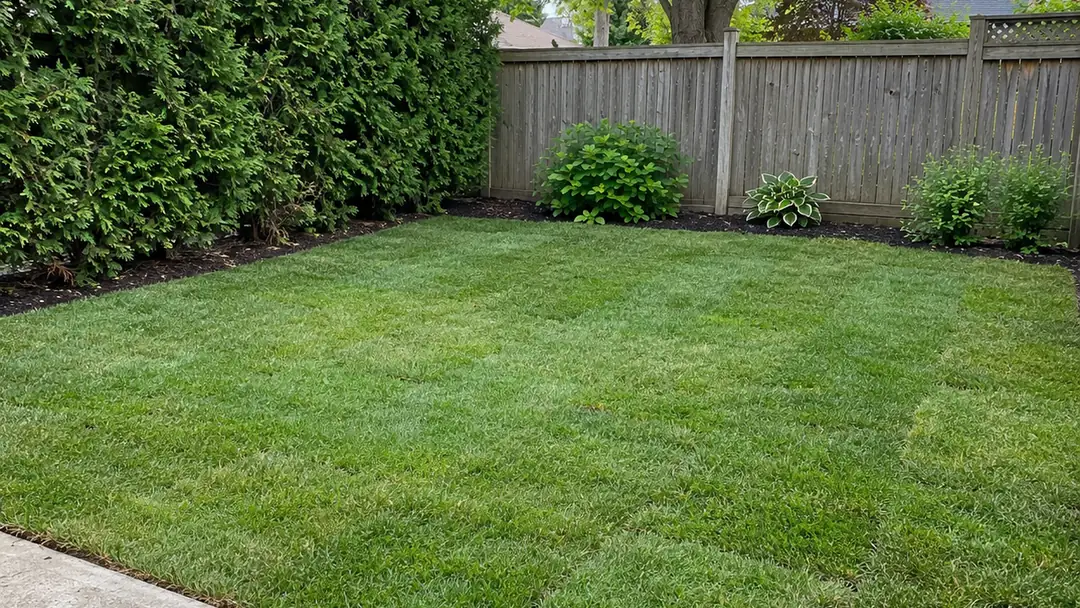
A proper sod installation has six steps: strip the old lawn, loosen the compacted soil, fix the grade, spread and level topsoil, lay fresh sod in staggered rows, then roll and soak it. Skip any of the early steps and new sod tends to yellow, shrink at the seams or sit in puddles by June.
- Strip the old turf, weeds and roots, and haul them away
- Break up hard clay so roots and water can get down
- Grade the surface so it falls away from the house
- Spread screened topsoil, rake it level and firm it
- Lay sod in staggered rows and cut it tight to edges
- Roll it, then soak until the soil underneath is wet
Site prep: grading away from the house and topsoil depth
Halton Region says your yard should slope away from the house by at least 2%, with 5% ideal, which is a drop of 2 to 5 cm for every metre. Under the sod we want at least 10 cm (4 in) of screened topsoil, the minimum the City of Brampton landscape specification sets for sodded areas.
On Milton and Mississauga clay, prep is where most of the hours go. If a builder's equipment packed the subsoil flat, topsoil laid on top behaves like a sponge in a bathtub: it fills with water and stays soggy. We break up that hard layer first, then add soil to fix low spots against the foundation, which also helps keep water out of the basement. Halton also suggests extending downspouts about 3 m from the house onto ground that slopes away.
Which sod do we use for Ontario lawns?
We lay No. 1 grade nursery sod, usually a Kentucky bluegrass blend with fine fescue. It is the standard Ontario lawn: dense, dark green and able to spread into small gaps. The City of Toronto sodding specification, for example, calls for 60 to 70% Kentucky bluegrass and 30 to 40% creeping red fescue.
Bluegrass loves sun and needs water to stay green in July, so sod is a weaker bet in deep shade under mature trees. For those spots we will tell you straight that a shade seed blend or a planted bed may do better. Sod also costs more than seed up front; what you pay for is a usable lawn in weeks instead of a season.
| Factor | Sod | Seed |
|---|---|---|
| Time to a usable lawn | A few weeks | Most of a season |
| Upfront cost | Higher | Lower |
| Bare soil and erosion at the start | Covered from day one | Exposed until it fills in |
| Deep shade | Struggles | Shade blends do better |
| Best for | New builds, full replacements, slopes | Thin lawns and overseeding |
How we lay sod: same day, staggered seams, rolled
Sod is a living crop that heats up and dries out on the pallet, so we lay it the same day it is delivered. Rolls go down in rows with the seams staggered like brickwork, edges butted tight with no overlaps or gaps, then the whole lawn is rolled so the roots touch the soil.
Municipal specs are strict on this. Toronto's requires sod delivered within 24 hours of being cut, laid within 36 hours, and watered within 12 hours of laying so moisture reaches the top 100 mm of topsoil. On slopes we lay rows across the grade and pin them with wooden pegs. Broken or dried-out pieces go in the trailer, not on your lawn, because they shrink and leave gaps.
How should you water new sod in the first 3 weeks?
Soak new sod on day one until the soil under it is wet about 10 cm (4 in) deep, then water every day to keep that soil moist, more in heat and wind. Once the sod resists a gentle tug, usually 10 to 14 days in, move to deeper, less frequent watering.
Halton Region's outdoor water use rules allow watering newly planted sod during restrictions until it is established, so a restriction notice is no reason to let it dry out. Edges beside driveways and interlock dry first because the pavement heats up; give them an extra pass with the hose.
| When | What to do | How to check |
|---|---|---|
| Day 1 | Soak until the soil under the sod is wet 10 cm (4 in) down | Lift a corner: soil should be dark and damp |
| Days 2 to 14 | Water daily, early morning if you can | Sod never feels crisp, seams never open |
| Days 10 to 14 | Tug test in a few spots | Resistance means roots have taken hold |
| Week 3 onward | Deep watering once or twice a week | Footprints spring back |
When is the best time to lay sod in Ontario?
Late August to September is our favourite window for laying sod in Ontario: warm soil drives root growth while cooler air eases stress. Spring, from May once the ground firms up, is next best. Summer works with serious watering, and sod should never go down on frozen or waterlogged soil.
Even the City of Toronto specification only allows sodding between May 1 and October 31, and rules out excessively wet conditions and frozen ground. Late-season sod has fewer weeks to root before winter, so we push October jobs earlier where we can. Our guide to the best time to sod your lawn in Ontario breaks down each season. Once it has rooted, the new lawn can join our weekly lawn mowing route.
How much does sod installation cost?
Sod installation is priced by the job after a free quote, because the sod is often the smaller part of the bill. Cost depends on the area, how much old turf and soil has to come out, how much topsoil the grade needs, wheelbarrow access to the yard, and disposal.
An open front yard in Dempsey with a decent grade is a very different job from a backyard in Churchill Meadows reached through a narrow side gate, with a low spot against the foundation. Our Milton lawn care page covers the neighbourhoods we serve. Send photos and rough measurements on WhatsApp at 437-433-1994 and we usually quote the same day; new customers get $25 off their first service. For wider context, see what lawn care costs in Mississauga and the GTA.