
A commercial lawn maintenance contract should spell out every visit, task and report before the season starts. Here is the scope sheet, the month-by-month mowing schedule and the bid checklist for Milton and Halton properties.
What should a commercial lawn maintenance contract include?
A commercial lawn maintenance contract should name the exact areas covered, the season dates, how often each task happens month by month, what counts as extra work, how visits are reported, and the price, payment and cancellation terms. If a task is not written down, assume it is not included.
Most landscaping disputes on commercial sites trace back to one vague line: "lawn maintenance as required." A board member expects weekly edging; the contractor planned on twice a month. A written scope protects both sides and makes the bids you collect comparable.
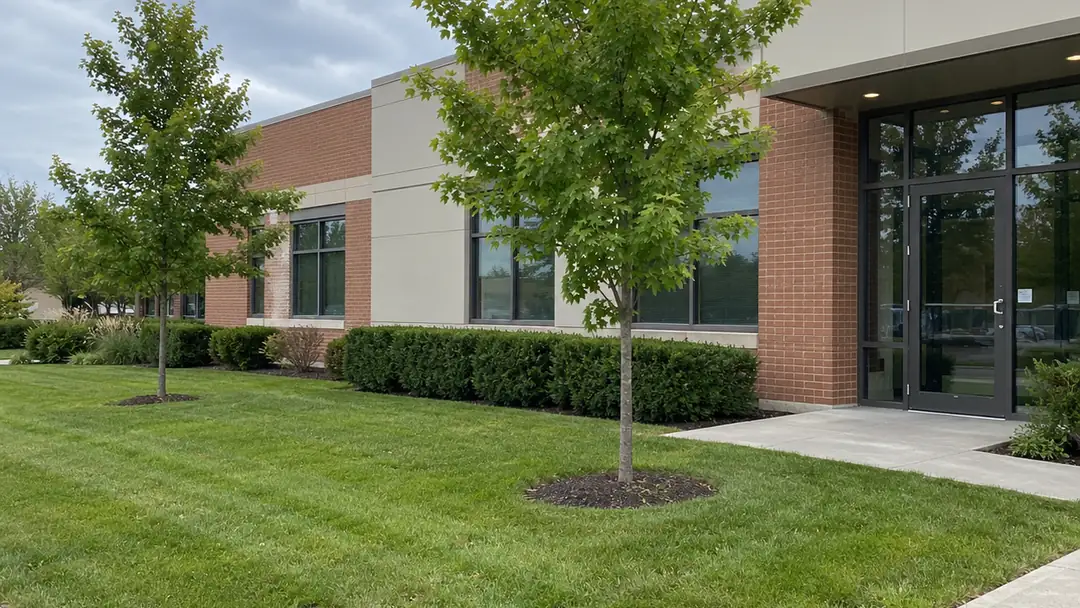
Start with a site map: turf, beds, parking islands, the road allowance strip, and anything that is not yours to cut. For a townhouse complex, mark which yards are common elements. Ten minutes with a printed aerial photo saves a season of arguments.
- A site map with every turf area, bed and hard edge marked
- Season dates, usually mid-April to mid-November in Halton
- Visit frequency by month, not just "weekly"
- Every task, with a standard for "done"
- Extras and how they are priced
- Reporting, rain-day and drought rules
- Insurance, price, HST, payment, renewal and cancellation
Commercial landscaping maintenance checklist (scope of work)
Use the table below as a starting scope for a plaza, office or townhouse complex in Milton or anywhere in Halton. Delete what you do not need, add what you do, and send the same sheet to every bidder so the prices that come back cover identical work.
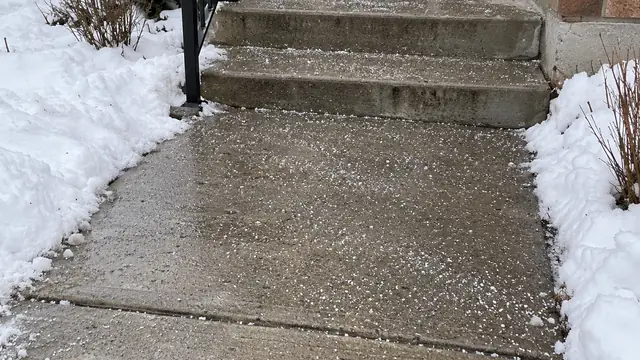
Two rows deserve a note. Spring cleanup on a commercial lot is mostly winter damage: plow-scraped edges, sand and salt along walkways (see our guide to rock salt damage on lawns and interlock). And fall cleanup plus core aeration belong in the mowing contract so they happen before the first plow run. For beds and hedges, see our guides to mulching depth and timing and when to trim cedar hedges.
| Task | How often | When | What "done" looks like |
|---|---|---|---|
| Mowing | Weekly in peak growth | Mid-April to early November | Even height, no more than a third of the blade per cut |
| String trimming | Every mowing visit | Full season | Signs, posts, fences, hydrants, tree rings |
| Edging | Every 2 to 4 weeks; blow off every visit | May to October | Clean line on curbs, walkways, islands |
| Litter pickup | Every visit, before mowing | Full season | No shredded litter on turf or in beds |
| Spring cleanup | Once | April | Debris, plow damage and salty sand cleared |
| Fall cleanup | One or two visits | Late October to November | Leaves off turf and beds before snow |
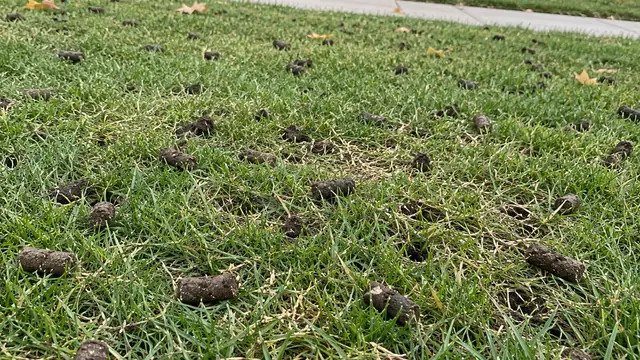
| Core aeration | Once a year | September (or spring) | Even pass, cores left to break down |
| Fertilizing | 2 to 4 applications | Spring to late fall | Weed control limited to products Ontario allows |
| Bed maintenance | Every 2 to 4 weeks | May to October | Weeded, edged, mulch topped up yearly |
| Shrub and hedge trimming | Once or twice | June, optional August | Clean shape, entrance sight lines clear |
| Reporting | Every visit | Full season | Date, time, tasks, photos of issues |
What is a good commercial grass cutting schedule in Halton?
Plan on weekly cuts through May and June, weekly or every 7 to 10 days in July and August depending on rain, weekly again in September, then every 7 to 14 days in October with a final cut in early November. That works out to roughly 22 to 30 visits a season.
Two rules keep a commercial lawn looking managed. First, never remove more than a third of the leaf in one cut, the long-standing turf rule repeated in UMass Extension's lawn calendar. Second, stay well clear of the Town of Milton's Community Standards limit: grass and weeds must be under 20 cm (8 in).
Write in a drought rule: if the turf goes dormant in late July, the crew still trims, blows and picks up litter but skips the mower so it does not tear up brown grass. Settle that in April, not August.
| Month | Frequency | Approx. visits | Why |
|---|---|---|---|
| April | From mid-month, every 10 to 14 days | 1 to 2 | Growth starts as soil warms |
| May | Weekly | 4 to 5 | Fastest growth of the year |
| June | Weekly | 4 to 5 | A skipped week means clumps |
| July | Weekly or every 7 to 10 days | 3 to 5 | Slows in heat and drought |
| August | Weekly or every 7 to 10 days | 3 to 5 | Picks up again after rain |
| September | Weekly | 4 | Second peak; best month to aerate |
| October | Every 7 to 14 days | 2 to 4 | Leaves matter more than grass |
| November | Final cut | 1 | Slightly shorter last cut |
How do you compare commercial lawn maintenance bids?
Send every bidder the same scope sheet, site map and visit count, then compare the price per visit, the exclusions, the reporting and proof of insurance. A bid far below the others usually cuts visits, drops trimming or edging, or prices the extras high once you have signed.
Convert every bid to the same unit before comparing, and read the task column, not just the total. A cheaper bid that quietly drops edging looks fine in May and ragged by July, and by then the season is paid for.
- Price per visit: season price divided by visits. If a bid hides the visit count, ask.
- Exclusions: storm cleanup, irrigation, plant replacement.
- Reporting: a date-stamped log with photos beats "we were there."
- Insurance: ask each bidder for a current certificate.
- Term: dates, renewal, and how either side can cancel.
Monthly vs per-visit pricing for commercial lawns
Monthly pricing spreads an agreed number of visits into equal payments, which suits condo boards, plaza owners and anyone working to an annual budget. Per-visit pricing suits sites with irregular needs. Either works if the contract states the visit count behind the number.
| Factor | Monthly contract | Per visit |
|---|---|---|
| Budgeting | Same amount each month | Varies with weather and growth |
| Visits | Fixed count written into the scope | Billed as they happen |
| Dry summer | Same payment; the scope says what replaces mowing | Fewer cuts, lower bill |
| Wet spring | Extra growth absorbed in the price | More cuts, higher bill |
| Best for | Condos, townhouse complexes, plazas, offices | Small or seasonal sites, add-on areas |
How much does commercial lawn maintenance cost in Milton?
Our commercial lawn care starts from $300 a month plus HST for a small commercial lot. Larger plazas, townhouse complexes and multi-building sites are priced per site with a free quote, based on turf area, trimming detail, beds and the extras in your scope.
What moves a commercial price: total turf area; how much has to be trimmed by hand around islands, sign bases, fence lines and slopes; the number of beds; the litter load, which is heavier at a plaza with a drive-through than at an office; and time windows, such as finishing before stores open. In Ontario, HST adds 13 percent to the contract price.
Seasonal work runs on a written contract, and most clients pay by Interac e-Transfer. New customers get $25 off their first service. We are based in Milton and work across Halton, Peel and west Toronto; our page on lawn care in Milton covers the local details.
Should you pair a summer lawn contract with a winter snow contract?
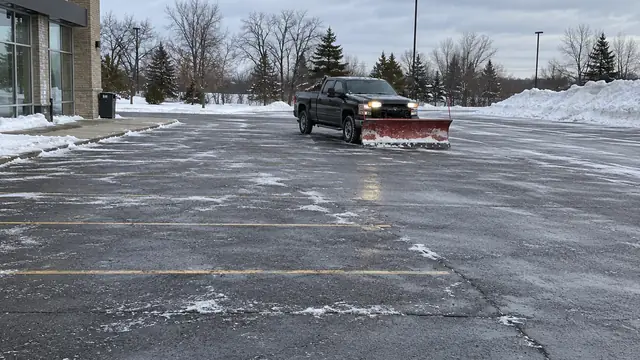
For most commercial sites, yes. A company that knows your curbs, islands, catch basins and walkways in summer plows them better in winter, the fall cleanup gets done before the first snow, and spring cleanup repairs plow damage without two contractors pointing at each other.
Our commercial snow removal covers plowing, walkway shovelling and salting for plazas, small commercial lots, townhouse complexes, condo and property-manager sites, and places of worship. The written scope lists lots, walkways and salt, with visit reports on request, and each site is priced individually after a free site visit.
If you are writing the winter scope now, start with our commercial snow removal checklist for property managers. Ask for both quotes together so the hand-off dates line up: the last fall cleanup in November, the first spring cleanup in April. To start, send the address and a photo for a commercial lawn care quote on WhatsApp to 437-433-1994.
Frequently Asked Questions
How often should a commercial lawn be mowed in Ontario?
Weekly through the main growing season, May to the end of September, with the interval stretching to 7 to 10 days in hot, dry spells and to 10 to 14 days in April and late October. A typical Halton season runs about 22 to 30 cuts, ending with a slightly shorter final cut in early November.
What is the difference between a commercial and a residential lawn maintenance contract?
A commercial contract covers more than grass: litter, hard surfaces, parking islands, sight lines at entrances, visit reporting and proof of insurance for the owner or condo corporation. It is usually a season split into monthly payments, with a written scope a board can check visits against.
Is aeration included in a commercial lawn maintenance contract?
Only if the scope says so, and many basic mowing contracts leave it out. Core aeration once a year, ideally in September, is one of the best things you can do for compacted clay turf in Milton, Brampton and Mississauga, so ask every bidder to price it as a separate line you can keep or drop.
Can a landscaper spray weeds on a commercial lawn in Ontario?
Ontario bans the cosmetic use of many pesticides, including 2,4-D and glyphosate, on lawns, gardens, driveways and parks. Weed control on a commercial lawn relies on products whose active ingredients are on the province's Allowable List, plus thick turf, the right mowing height and overseeding. Ask each bidder exactly what they plan to apply.
How do I get a commercial lawn care quote from Lawn By Moe?
Send the property address, a photo or aerial screenshot and your scope (the table in this guide works) on WhatsApp to 437-433-1994, or email lawnbymoe@gmail.com. Quotes are free and usually come back the same day. Small commercial lots start from $300 a month plus HST.
Sources
Want Us to Handle It?
Lawn By Moe is based in Milton and serves Mississauga, Oakville, Burlington, Halton Hills, Brampton and the GTA. Free quotes, usually the same day.