
One cubic yard of mulch covers about 108 sq ft at 7.5 cm (3 in) deep. Here is the math, a coverage chart, the right timing for Ontario beds, and which mulch actually earns its place.
How much mulch do I need? The quick formula
Multiply the bed area in square feet by the depth you want in inches, then divide by 324. The result is cubic yards. A 200 sq ft bed at 3 in (7.5 cm) deep needs 200 x 3 / 324 = 1.85 cubic yards, so you would order 2.
Why 324? A cubic yard is 27 cubic feet, and a foot is 12 inches, so 27 x 12 = 324. Metric is simpler still: square metres x depth in metres = cubic metres. A 20 m² bed at 7.5 cm needs 20 x 0.075 = 1.5 m³.
Measure each bed as rectangles and circles: length x width for straight beds, 3.14 x radius x radius for a tree ring. Add 5 to 10 percent for uneven edges and settling, then round up. Running short halfway down the last bed is worse than having a few spare bags.
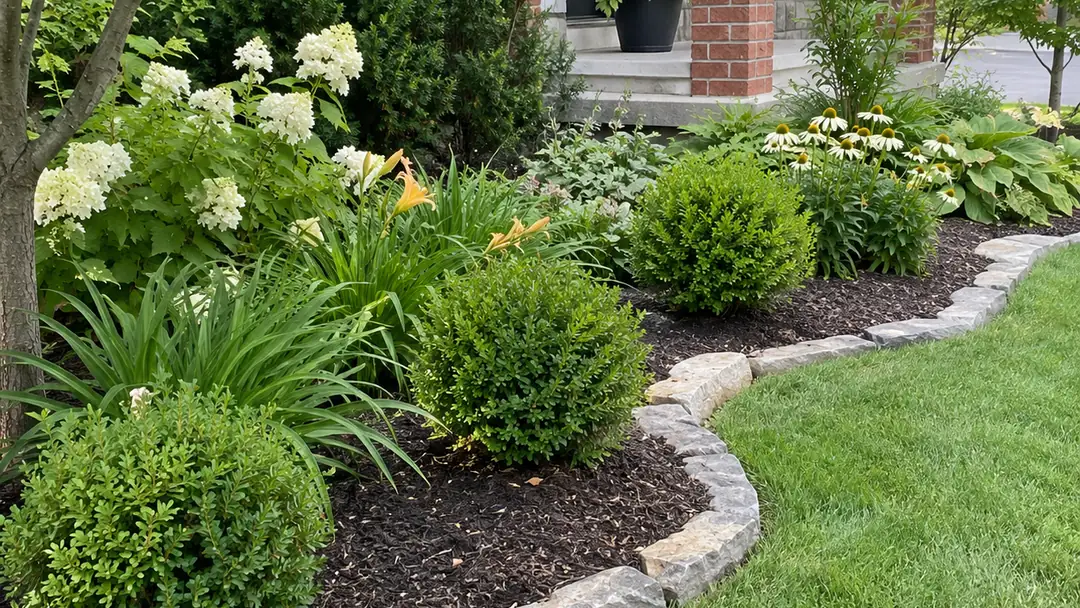
A typical example: a front bed along a semi in Dempsey, 9 m x 1.2 m (30 ft x 4 ft), plus two tree rings 1.8 m (6 ft) across. That is 120 + 28 + 28 = 176 sq ft. At 3 in: 176 x 3 / 324 = 1.63 cubic yards. Order 1.75 to 2 yards, or about 22 bags of 2 cu ft.
Mulch coverage chart: what one cubic yard covers
One cubic yard of mulch covers about 324 sq ft at 2.5 cm (1 in), 162 sq ft at 5 cm (2 in), 108 sq ft at 7.5 cm (3 in) and 81 sq ft at 10 cm (4 in). One cubic metre covers 40, 20, 13.3 and 10 square metres at those depths.
Bagged mulch: if the bags hold 2 cu ft (56.6 L), 13.5 bags make one cubic yard. Past about 3 yards, bulk delivery is usually cheaper per yard and leaves far less plastic, but you need a spot to dump it (a tarp on the driveway works) and a wheelbarrow. Or let our mulching crew measure, order and spread it.
| Depth | 1 cubic yard covers | 1 cubic metre covers | 2 cu ft bags per 100 sq ft |
|---|---|---|---|
| 2.5 cm (1 in), fall top-up | 324 sq ft (30 m²) | 40 m² (430 sq ft) | 4.2 |
| 5 cm (2 in), flower beds | 162 sq ft (15 m²) | 20 m² (215 sq ft) | 8.3 |
| 7.5 cm (3 in), shrubs and trees | 108 sq ft (10 m²) | 13.3 m² (143 sq ft) | 12.5 |
| 10 cm (4 in), coarse chips only | 81 sq ft (7.5 m²) | 10 m² (108 sq ft) | 16.7 |
How deep should mulch be?
Aim for 5 cm (2 in) in flower beds and 7.5 cm (3 in) around shrubs and trees. University of Maryland Extension says organic mulch should not exceed 3 in, and that shallow-rooted shrubs such as boxwood should get no more than 1 in.
The Morton Arboretum allows 3 to 4 in of medium to coarse material under trees and shrubs, because chunky bark lets air through, and only a couple of inches in perennial beds. Our rule: thinner for fine shredded mulch, a little thicker for coarse chips, and check last year's layer first. Two springs of "just add 3 inches" can leave 15 cm on the roots.
- Annual and perennial beds: 5 cm (2 in)
- Shrub beds and tree rings: 7.5 cm (3 in)
- Boxwood and other shallow-rooted shrubs: 2.5 cm (1 in)
- Paths with coarse chips: up to 10 cm (4 in), away from plants
When to mulch in Ontario
Mulch in late spring, once the soil has warmed and drained, which in Halton and Peel usually means mid-May to early June. Then top up lightly in fall as the soil cools. Mulching cold, wet beds in April holds the chill in and slows perennials down.
The Morton Arboretum gives the same timing: wait in spring until the soil warms and excess moisture drains away, and apply fall mulch once the soil starts to cool. The spring order is cleanup, edge, weed, then mulch. Mulch spread over live weeds only hides them for a couple of weeks.
In fall, deal with the leaves first. Once your fall cleanup is done, a thin 2.5 cm top-up insulates roots through freeze-thaw swings and stops bare soil from crusting; just keep it off perennial crowns. New plantings are the exception to the calendar: mulch them right after planting to hold moisture while roots settle in (see our landscape design and planting service).
Best mulch for Ontario gardens: cedar vs hardwood and the rest
For most Ontario front beds, shredded hardwood or shredded cedar is the right call. Hardwood knits together, stays put on slopes and feeds the soil as it breaks down; cedar is lighter, smells good and breaks down more slowly. Dyed mulch looks sharp but does nothing extra for the soil.
Our take: natural shredded hardwood for slopes and heavy clay beds, cedar for tidy front beds, and stone only for the drip strip right along the house. The Morton Arboretum points out that municipal wood chips are often free, and fallen leaves are free mulch you already own.
| Mulch | Lasts | Best for | Watch out for |
|---|---|---|---|
| Shredded cedar | Long | Tidy front beds, lighter colour | Light pieces can float in downpours |
| Shredded hardwood | Medium to long | Shrub beds, slopes, clay soil | Fades to grey in full sun |
| Dyed hardwood | Colour fades in a season | Curb appeal | No extra soil benefit |
| Pine bark nuggets | Long | Tree rings, open beds | Float and wash out on slopes |
| Arborist wood chips | Medium | Paths, tree rings, back beds | Coarse look; keep off stems |
| Shredded leaves | Short | Perennial and vegetable beds | Mat down if left whole |
| Stone or river rock | Permanent | Strip along the foundation | Holds heat, no soil benefit |
| Cocoa bean shells | Short | Skip if you have a dog | Theobromine and caffeine can make dogs sick |
Volcano mulching and other mistakes that hurt plants
The worst mistake is volcano mulching: piling mulch up against a tree trunk or shrub stems. It keeps the bark wet, which invites decay, insects and disease. Pull mulch back about 7.5 cm (3 in) from every trunk and stem so it forms a doughnut, not a cone.
Along the house, leave a clear strip of at least 10 cm (4 in) between mulch and siding or brick, and keep the soil sloping away from the wall. Iowa State University Extension advises keeping mulch several inches from the foundation and never letting it touch siding or cover window sills. Wet mulch against a wall holds moisture where you do not want it and gives insects an easy bridge into the house.
- Piling mulch against trunks and stems
- Going deeper than 7.5 cm (3 in) of organic mulch over roots
- Letting mulch touch siding or bury window sills
- Spreading bark or wood mulch over landscape fabric
- Mulching over live weeds instead of pulling them first
- Adding fresh mulch every spring without checking the total depth
DIY mulching or hiring it out?
DIY makes sense for a few beds and one or two yards of mulch. Hire it out when the job runs past about 3 yards, the beds need edging and weeding first, or every load has to go through a narrow side yard by wheelbarrow. That is where most of the hours go.
When you book mulching and garden bed work, tell us whether the beds also need edging and weeding so the quote covers the whole job. It is priced by quote: send your address and a photo of the beds on WhatsApp to 437-433-1994, and you will usually hear back the same day. New customers get $25 off the first service.
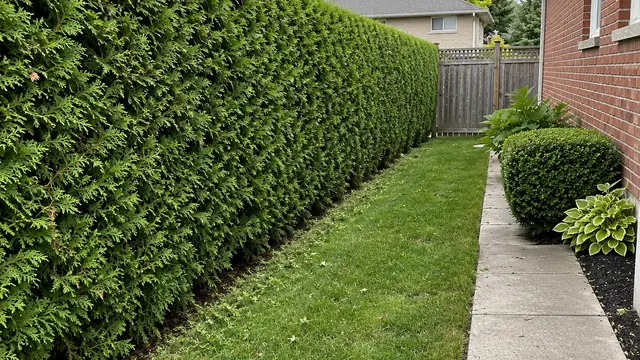
If a cedar hedge borders the beds, trim it before you mulch so the clippings do not land in fresh mulch; our guide on when to trim cedar hedges has the timing. We are based in Milton and work across Halton, Peel and west Toronto, so see lawn care in Milton for the local details.
Frequently Asked Questions
How many bags of mulch are in a cubic yard?
If the bags hold 2 cubic feet (56.6 L), 13.5 bags make one cubic yard, since a cubic yard is 27 cubic feet. With 3 cubic foot bags it is 9 bags. Check the bag, because sizes vary, and round up so you are not short on the last bed.
Should I remove old mulch before adding new mulch?
Usually not. Rake the old layer to loosen it, check the depth with a trowel, and add only enough to bring the total back to 5 to 7.5 cm (2 to 3 in). Remove old mulch if it is matted, mouldy, already deeper than 7.5 cm, or piled against stems.
Is cedar mulch better than hardwood mulch?
Neither wins everywhere. Cedar lasts longer, stays lighter in colour and smells good, which suits tidy front beds. Shredded hardwood knits together, holds on slopes and adds more organic matter to heavy clay as it breaks down. A practical split is hardwood in the back beds and cedar out front.
How far should mulch be from my house?
Keep mulch off siding and below window sills, with a clear gap of at least 10 cm (4 in) from the wall. Iowa State University Extension advises keeping mulch several inches from the foundation and never letting it touch siding.
Can I mulch in the fall in Ontario?
Yes, as a top-up. After the leaves are cleaned up in late October or November, a thin 2.5 cm (1 in) layer helps insulate roots through freeze-thaw cycles. Save the full spring mulching for mid-May to early June, once the soil has warmed and dried out.
Should I put landscape fabric under mulch?
Not under bark or wood mulch in planted beds. As the mulch breaks down on top of the fabric, weeds root into it anyway, and the fabric makes it hard to plant, divide perennials or improve the soil. Fabric works under stone, where nothing is supposed to grow.
Sources
Want Us to Handle It?
Lawn By Moe is based in Milton and serves Mississauga, Oakville, Burlington, Halton Hills, Brampton and the GTA. Free quotes, usually the same day.