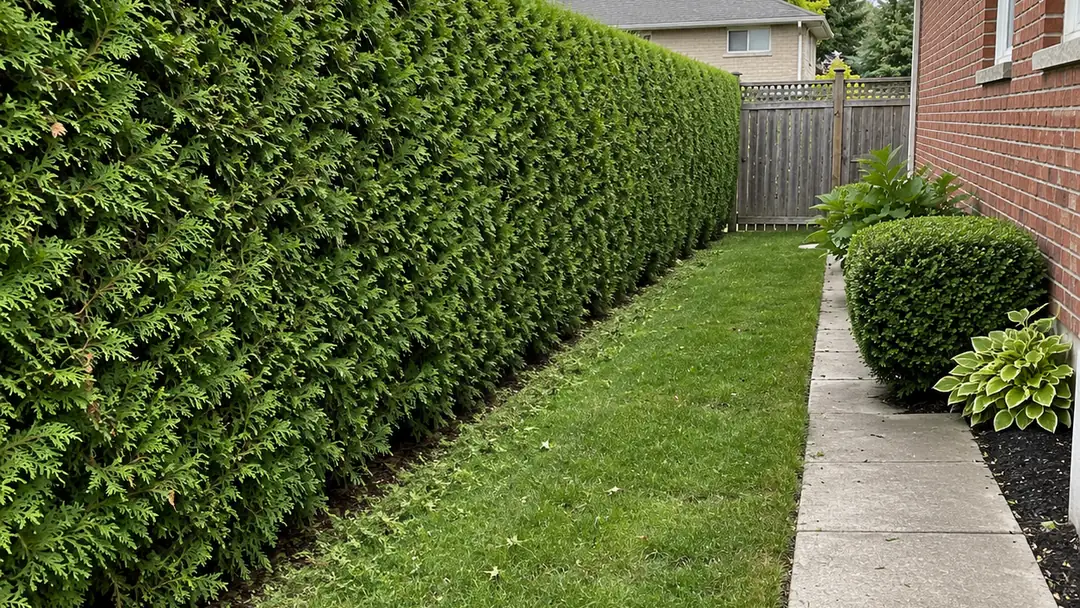
The best time to trim cedar hedges in Ontario is June, with an optional light touch-up before the end of August. Here is the month-by-month timing, the brown-wood rule and the nesting-bird law most people miss.
When is the best time to trim cedar hedges in Ontario?
The best time to trim cedar hedges in Ontario is June, after the spring growth has stretched out. A lighter second trim is fine in July or August. Finish by the end of August: growth pushed by later cuts may not harden off before frost and can brown over winter.
Extension guides agree on the edges of that window. Iowa State University Extension says evergreen hedge pruning usually starts in early spring (April), and Colorado State University Extension says arborvitae can be pruned any time except subzero weather or late summer. Our pick is June for the main trim, because the hedge then has the whole summer to fill in around the cuts.
Weather matters as much as the date. Skip trimming during a heat wave or a dry spell, when fresh cuts brown at the tips, and water the hedge deeply a day or two before you start. A cool, overcast day is the easiest on the hedge and on you.
| Month | Trim? | Notes |
|---|---|---|
| January to March | No | Brush off heavy snow; check winter ties |
| April | Light shaping only | Before new growth; nesting season is starting |
| May | Possible | Growth is still pushing, so expect to trim again |
| June | Best | Main trim; check for active nests first |
| July | Yes | Avoid heat waves and drought; water first |
| August | Light touch-up | Finish by the end of the month |
| September | Avoid after the first week | Late cuts push growth that may not harden off |
| October to December | No | Tie tall cedars before heavy snow |
Can you cut a cedar hedge back to brown wood?
No. Cedars only make new foliage from green growth. The bare brown wood inside the hedge has no buds to regrow from, so a cut into it leaves a permanent hole. Colorado State University Extension is blunt about it: prune arborvitae back to bare wood and you get a permanent bare spot.
That is why an overgrown cedar cannot be reset the way you can hard-prune a lilac or a privet. If a hedge has grown too wide, take it back a few centimetres at a time over two or three seasons, and stay inside the green layer every time. If that green layer is thin and the hedge still blocks the walkway, replacing the section with new cedars is often faster than waiting; ask about it when you book hedge trimming.
Brown patches from winter burn or road salt are a different problem. The wood underneath may still be alive. If the twigs are still flexible and you can see buds near the tips, give them until June before cutting anything out.
How to trim a cedar hedge, step by step
Check for nests, set a string line, trim the sides from the bottom up so the base ends up wider than the top, cut the top last, and never go past the green foliage. Light, regular trims beat one hard cut, and a sharp blade leaves cleaner ends that brown less.
- Watch the hedge for 10 to 15 minutes for birds flying in and out, then look inside before you start.
- If it has been dry, water deeply a day or two before.
- Run a string line between two stakes at the finished top height.
- Trim the sides first, working from the bottom up, angling the face so it narrows slightly toward the top.
- Cut only into the outer green growth. When you see brown stems, stop.
- Trim the top last, following the string.
- Rake clippings out of the hedge base and off the lawn so they do not smother the grass.
Tools for the job
- Hand shears for short hedges and touch-ups
- A sharp hedge trimmer; cordless is fine for most home hedges
- A pole trimmer, or a stable tripod or platform ladder, for tops over 1.8 m (6 ft)
- Stakes and a string line
- A tarp along the base to catch clippings
- Gloves and eye protection
Why a cedar hedge should be wider at the bottom
A hedge that is narrower at the top than at the base lets sunlight reach the lower branches, so it stays green to the ground. Iowa State University Extension recommends this shape for formal hedges. Trim it straight, or wider at the top, and the base gets shaded out and goes bare.
A slight slope is enough. On a 1.8 m (6 ft) hedge, aim for a top roughly 15 to 20 cm narrower than the base. The shape pays off in winter too: a narrow or rounded top sheds snow, while a wide, flat top collects it, and heavy wet snow is what splits cedars open.
Bird nests and the law: what to check before you trim
Under the federal Migratory Birds Regulations, 2022, made under the Migratory Birds Convention Act, 1994, it is illegal to damage, destroy, disturb or remove a migratory bird nest that contains a live bird or viable egg. Dense cedars are prime nesting cover, so look before you cut.
Environment and Climate Change Canada publishes general nesting periods: late March to late August in zone C1 and early April to late August in zone C2, the two zones covering southern Ontario. That overlaps almost the whole trimming season, and the government notes that local nesting can start earlier or run longer than the published dates.
Trimming during nesting season is not banned; disturbing an active nest is. If you find one, Canada.ca guidance is to stop disruptive work in that area, move away quietly, keep a buffer around the nest and come back once the young have left. Trim the rest of the hedge and finish that section later.
Fall and winter care: snow load, tying and salt
Do not trim after early September. Before heavy snow, usually by late November, loosely tie tall or multi-stem cedars with soft twine or cloth strips so wet snow cannot splay them. After a storm, brush snow off with upward sweeps, and never whack frozen, brittle branches.
Cedars along driveways and roads take extra punishment from plow-thrown snow and salt spray. A burlap screen on the road side helps. Mark the hedge line with snow stakes in fall so whoever clears your driveway, our snow removal crews included, knows not to pile snow on it. Salt burn shows up as brown foliage on the side facing the road, the same salt that marks lawns and pavers (see our guide to rock salt damage).
Rake clippings and leaves out of the hedge base during your fall cleanup, since a wet mat against the trunks stays damp all winter. If the autumn has been dry, water the hedge deeply before the ground freezes so it goes into winter well hydrated.
When to call a pro for hedge trimming
Call a pro when the hedge is taller than you can reach safely from a stable ladder, runs a long way, has been neglected for years, or sits beside a busy road or overhead wires. Those jobs reward a proper ladder setup, sharp equipment and a practised eye for a level line.
Our hedge and shrub trimming is priced by quote, based on length, height, access and cleanup. Send your address and a photo on WhatsApp to 437-433-1994 and you will usually have a quote the same day; new customers get $25 off. If sections are dead or hollow, we can plan replacements as part of landscape design and planting, and the bed at the base will thank you for the right mulch depth.
Frequently Asked Questions
Can I trim my cedar hedge in the fall?
It is best not to. Cuts made after early September can push tender new growth that does not harden off before frost, which leads to brown, winter-burned tips. Do the main trim in June and any touch-up by the end of August, then leave the hedge alone until spring.
How much can you cut off a cedar hedge?
Only as much as you can remove while leaving green foliage on every branch. On the sides that is usually this year's growth plus a little of last year's. To lower the height, cut the tops a little below the line you want and let side growth fill in, in stages over two or three seasons if it is far too tall.
Will brown spots on a cedar hedge grow back?
It depends on the cause. Bare wood exposed by cutting too deep will not regrow, because cedars have no buds on old brown wood. Winter burn or salt damage on the foliage is different: if the twigs are still flexible, some green can return by early summer, so wait until June before cutting it out.
Is it illegal to trim hedges during nesting season in Canada?
No. Trimming itself is legal, but under the Migratory Birds Regulations, 2022, damaging, destroying, disturbing or removing a migratory bird nest that holds a live bird or viable egg is not. Check the hedge before you cut, and if you find an active nest, leave that section until the young have left.
How often should a cedar hedge be trimmed?
Once a year in June keeps most home cedar hedges in shape. Formal hedges with a crisp, squared look may need a second light pass by late August. Regular light trims are far safer than leaving a hedge for years and then trying to cut it back hard into brown wood.
Sources
- Colorado State University Extension: Pruning evergreens
- Iowa State University Extension: How to prune formal hedges
- Environment and Climate Change Canada: Nest protection under the Migratory Birds Regulations, 2022
- Environment and Climate Change Canada: General nesting periods of migratory birds
- Environment and Climate Change Canada: Guidelines to avoid harm to migratory birds
Want Us to Handle It?
Lawn By Moe is based in Milton and serves Mississauga, Oakville, Burlington, Halton Hills, Brampton and the GTA. Free quotes, usually the same day.