What surfaces can you power wash, and at what pressure?
Most outdoor surfaces can be washed, just not at the same pressure. Poured concrete handles the most, interlock needs moderate pressure at a low angle to keep its joint sand, and wood, vinyl siding and softer stone need low pressure and a wide spray. Too much force etches, furs or strips the surface.
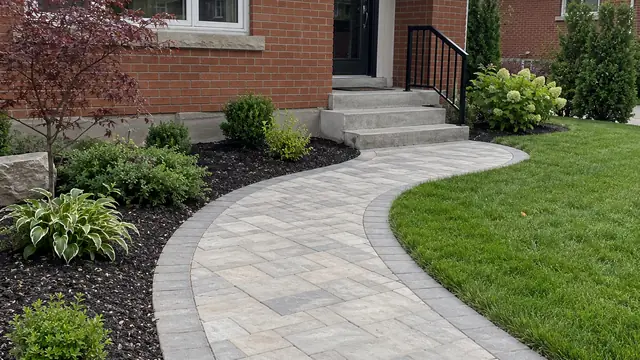
Unilock's paver cleaning guide tells owners to spray at an angle no greater than 30 degrees so the joint material stays put, and never to scrub with a wire brush, which can leave metal bits that rust-stain the surface. On cedar and pine decks we work along the boards, not across them, and stay well below the pressure that lifts the soft wood between the growth rings.
| Surface | Pressure and technique | Main risk | Aftercare |
|---|---|---|---|
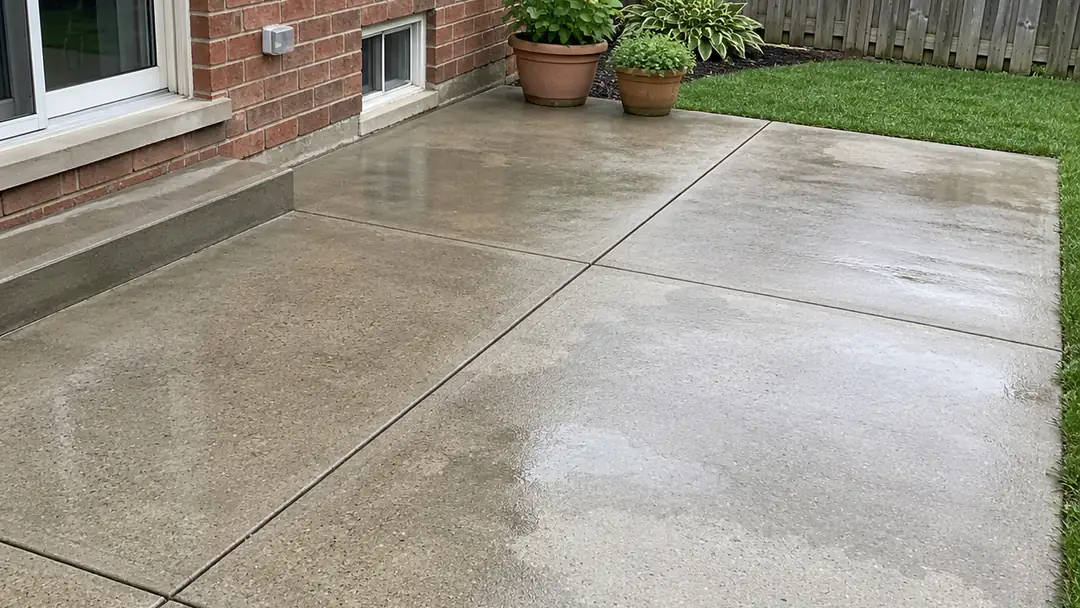
| Poured concrete driveway | Higher, with a rotary surface cleaner | Stripes or etching from a narrow tip held close | Optional sealer once dry |
| Interlock and pavers | Moderate, sprayed at 30 degrees or less | Blowing the joint sand out | Re-sand with polymeric sand |
| Wood deck | Low, wide fan tip, along the grain | Furred, raised grain and gouges | Dry fully before staining |
| Vinyl siding | Low, spraying level or downward | Water forced up behind the panels | None |
| Flagstone and natural stone | Low to moderate | Flaking on softer stone | Check and refill joints |
Interlock cleaning and re-sanding: why polymeric sand matters
Cleaning interlock properly always pulls out some joint sand, so re-sanding is part of the job, not an extra. Once the pavers are bone dry, we sweep polymeric sand into the joints, clear the surface and mist it so the binder sets. Firm joints stop pavers shifting and make it harder for weeds and ants to move in.
Polymeric sand is fussy about weather. Alliance Gator's instructions, for example, call for a completely dry surface, no rain within 24 hours on a regular (non-drainage) base, temperatures at or above 0°C (32°F), and a reveal of about 3 mm (1/8 in) between the sand and the top of the paver. That often means washing one day and sanding once the joints have dried. Sunken or broken pavers are a repair for our interlock and hardscaping crew; sand will not fix them.
Can power washing remove oil stains from a driveway?
Fresh oil comes out far better than old oil. Soak up what you can with kitty litter or another absorbent first, then we pre-treat the spot with a degreaser, give it time to work and wash. Stains that have sat in concrete for years usually fade a lot but may not vanish completely.
Unilock gives the same order for pavers: absorb first, then clean with soap and water or a paver cleaner. Mississauga's pollution prevention guidance explains why the absorbing step matters beyond looks: soaps, oils and car fluids hosed into the roadside catchbasin flow untreated to local creeks and Lake Ontario, and the city's Storm Sewer Use By-law limits what can go down those drains. We sweep up used absorbent and keep detergent to the minimum that does the job.
When is the best time for power washing in Milton and Mississauga?
Spring is the main season: once overnight frosts are over, a wash clears the salt residue, sand and grime winter leaves on driveways, steps and interlock. Late summer and early fall are the other good window, especially before sealing pavers or staining a deck, while it is still dry and warm enough for joint sand to set.
Water supply is the other timing question. Halton Region notes that demand can rise by up to 50% in long hot, dry spells, and it can raise its outdoor water use restriction level when needed; check the current level on halton.ca or call 311 before a big July wash. Peel Region asks residents to sweep rather than hose down driveways for routine cleaning, which is fair: one proper wash a year beats spraying every weekend.
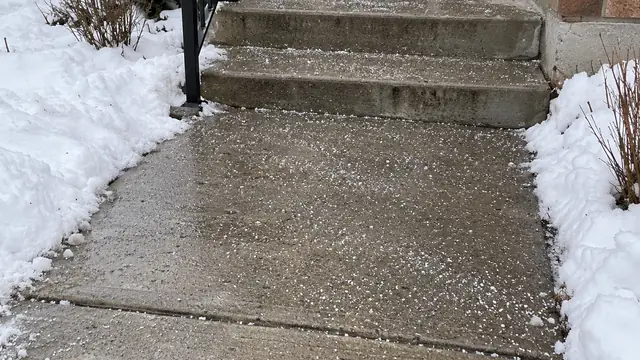
Salt is the reason spring washing matters on interlock and concrete steps; our post on rock salt damage to lawns and interlock covers what it does to pavers and the grass beside them. For the full homeowner rundown on driveways, read power washing your driveway in Mississauga.
What do we need from you on power washing day?
A working outdoor tap, with the inside shut-off valve turned back on if you closed it for winter. Move cars off the driveway, clear furniture and planters from the patio or deck, close nearby windows, and point out loose pavers, cracked steps or fresh paint before we start.
- Outdoor tap access, with the water turned on
- Cars, bins and bikes moved off the area
- Patio furniture, mats and planters cleared
- Windows and the garage door closed near the work
- Pets kept inside while we wash
How much does power washing cost?
Power washing is priced by the job after a free quote. Price depends on square footage, the surface, how much moss, algae or oil is on it, whether interlock needs re-sanding and how much polymeric sand that takes, plus steps, access and any extra areas like a back patio or deck.
A two-car concrete driveway in Dempsey with a front walk is a short, simple job; a large interlock patio in Glen Abbey with moss in every joint and a full re-sand is a much bigger one. Send a photo on WhatsApp at 437-433-1994 and we usually reply the same day. New customers get $25 off their first service, and we work across Milton, Mississauga and Oakville.