What hardscaping work do we do in Milton?
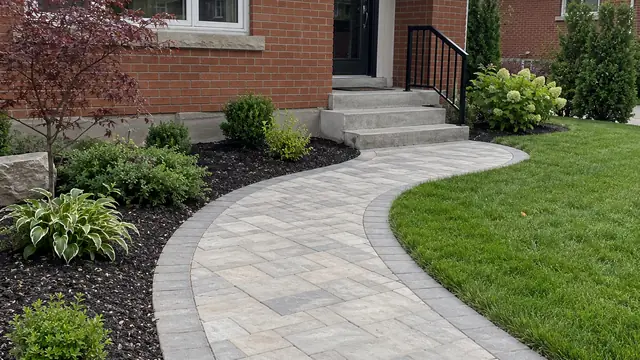
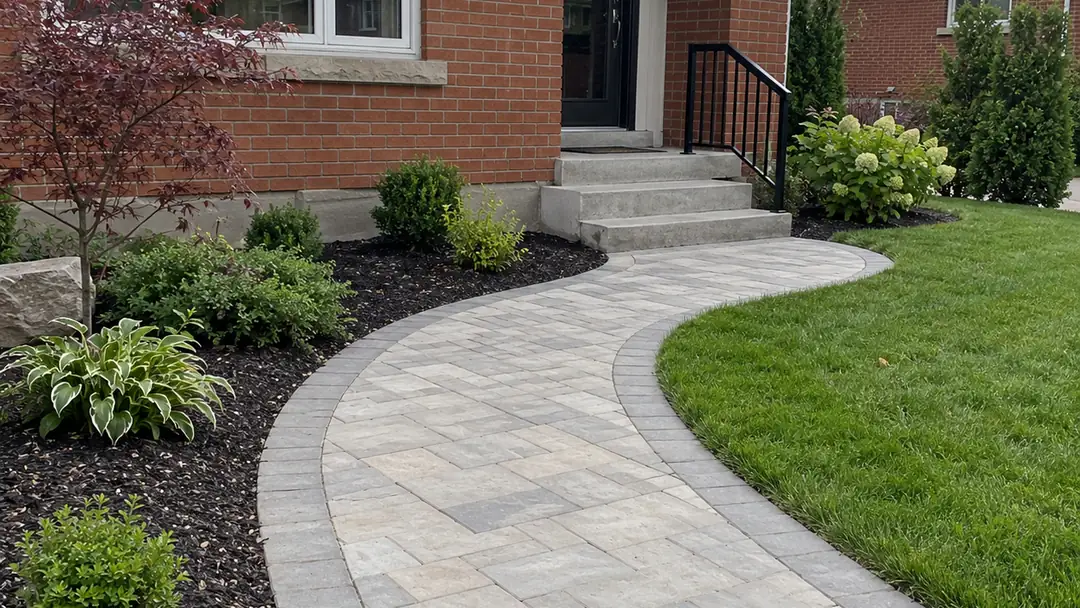
We build and repair interlock patios, walkways, front steps, driveway borders and garden walls in Milton and across Halton and Peel. Typical jobs are backyard patios, front walkways that have sunk or heaved, and paver borders that dress up an asphalt driveway without touching the curb.
If you are comparing a Milton landscape construction company for a bigger build, ask every contractor the same three questions: how deep is the base, how is it compacted, and where does the water go. The answers tell you more than any paver brochure. Beds and planting around a new patio fall under our landscape design and planting work.
- Patios: backyard interlock patios, fire pit pads and seating areas sized to your furniture
- Walkways: front entrance walks and side-yard paths to the backyard gate
- Front steps: steps reset level, with interlock landings
- Driveway borders: rows of pavers along an asphalt driveway, inside your lot
- Retaining walls: low garden walls and raised planters
- Repairs: sunken pavers, heaved sections, weeds in the joints and washed-out sand
How deep should the base be for interlock in Ontario?
Unilock, the paver maker, guides 10 to 15 cm (4 to 6 in) of compacted base for pedestrian walkways and 20 to 30 cm (8 to 12 in) for driveways, compacted in layers of 7.5 to 10 cm (3 to 4 in). Clay soil needs deeper digging and a geotextile under the base.
Freeze-thaw is why base depth matters so much in Ontario. Water trapped in or under the base freezes, expands and lifts pavers, then lets them settle unevenly when it thaws. A thick, compacted, free-draining base gives that water somewhere to go. When a walkway sinks within a few years, a thin or poorly compacted base is the usual cause.
Unilock also recommends a 1 to 2% slope for drainage and warns against stone dust or limestone screenings under the pavers. We set every patio to shed water toward the lawn or a garden bed, never toward the house or a neighbour, because water against the foundation ends up in the basement.
| Use | Compacted base | Our notes |
|---|---|---|
| Walkways and patios | 10 to 15 cm (4 to 6 in) | We go to the deep end in low, wet spots |
| Driveway borders and parking pads | 20 to 30 cm (8 to 12 in) | Tires load the edges hardest |
| Clay soil | Dig deeper, geotextile first | Keeps base stone from mixing into the clay |
| Each compaction layer | 7.5 to 10 cm (3 to 4 in) | A plate compactor cannot properly pack thicker layers |
| Slope away from the house | 1 to 2% | About 1 to 2 cm of fall per metre |
Do I need locates or a permit before building a patio?
You need utility locates for any project that breaks ground, no matter how shallow. Ontario One Call, now operating as Ontario Dig Authority, arranges them for free, and a single-address request should go in at least 5 business days before digging. We submit the request for your job before we start.
Utility owners mark buried gas, hydro, cable and other lines with paint or flags. If a line crosses where the walkway or patio goes, we hand-dig near the marks rather than machine-dig.
Permits come up when a project touches the driveway entrance. The Town of Milton requires a curb cut and entrance permit for any change to a driveway entrance within the road allowance, and does not issue widening permits in subdivisions registered from 2000 onward. Mississauga needs no building permit to widen a driveway, but zoning caps the width. Our driveway borders stay inside your lot and leave the curb alone.
How do you repair sunken interlock and weeds in the joints?
Sunken or heaved interlock is fixed by lifting the pavers, rebuilding and compacting the base underneath, relaying the same pavers and re-sanding the joints. Weeds in the joints mean the sand has washed out, so we clean the joints, power wash the surface and sweep in fresh polymeric sand.
For a patio that is level but tired, a full lift is overkill. Our power washing service clears out moss, dirt and old sand, and fresh polymeric sand locks the joints again. Polymeric sand needs dry weather to set, so we book that work around the forecast.
- Mark the low or heaved area and lift the pavers, keeping them in order
- Dig out soft bedding and base, then add and compact new base
- Re-screed the bedding layer to grade, sloping away from the house
- Relay the original pavers, replace cracked ones and compact them in
- Sweep in polymeric sand, mist it to set and clean the surface
Does road salt damage interlock, and should it be sealed?
Unilock says rock salt (sodium chloride) is safe to use on its pavers, as sparingly as possible, but warns that magnesium-based de-icers can damage the paver surface. The bigger salt damage is usually to the grass and plants along the edges. Sealing is optional and goes on clean, dry pavers with set joints.
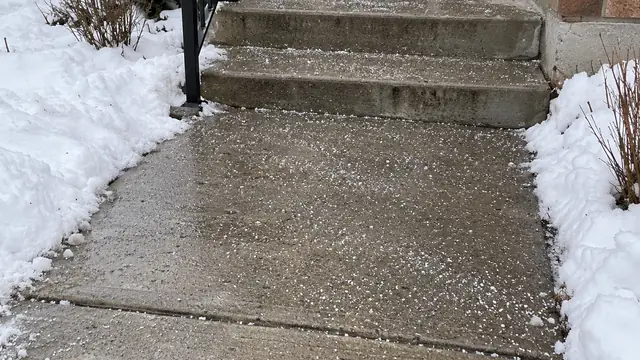
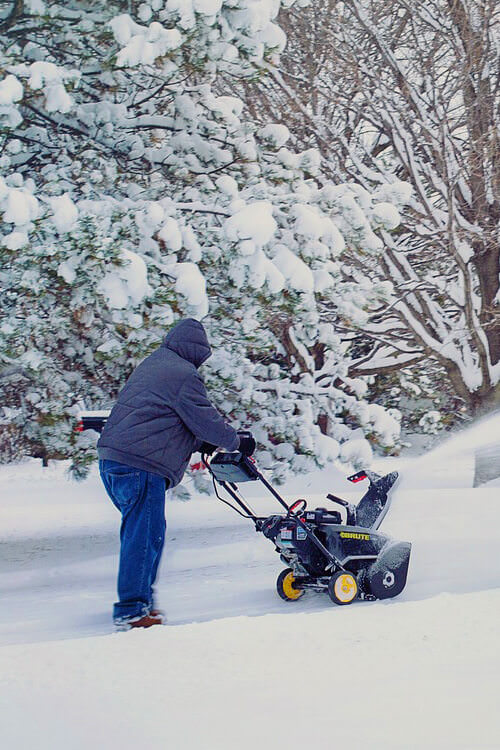
Shovel first and salt second, so you use less. Unilock also recommends a plastic shovel, since metal blades can scratch pavers, and plastic covers on metal plow and snowblower blades. Salt is included on our residential snow removal contracts for driveways, walkways and front steps. Our post on rock salt damage to lawns and interlock covers spring clean-up.
How much does an interlock patio cost in Milton?
Interlock and hardscaping projects are priced by the job after a free quote. Area is the starting point, but the price really moves with excavation and soil, access, the paver you choose, the number of cuts around curves and steps, and how much old material has to be hauled away.
For typical price ranges and what pushes them up or down across the GTA, read our interlock patio cost guide. New customers get $25 off their first service. Send photos and rough measurements on WhatsApp at 437-433-1994 to book a free quote visit.
- Size and shape: simple rectangles need fewer cuts than curves and multiple levels
- Excavation and access: open access versus wheelbarrow trips through a side gate
- Soil: clay or wet ground needs deeper digging and geotextile
- Pavers: standard concrete pavers versus premium textures and large slabs
- Removal: old concrete, broken pavers or sod hauled away